
Indoor Activities for Kids on Rainy Days: Simple, Screen-Free Ideas Parents Will Actually Use
The rain had been falling since breakfast. Your youngest had already announced they were bored before you'd finished your first coffee, the cushions were somehow on the floor, and someone had asked for the iPad... twice. Every parent knows this moment. Rainy days can feel incredibly long when energetic kids are stuck inside, especially if you're juggling work, housework or simply trying to make it to bedtime with your sanity intact. The good news? Keeping kids entertained doesn't have to involve expensive craft kits, elaborate Pinterest projects or hours of preparation. In fact, the simplest activities are often the ones kids remember most.
Why rainy days matter more than we think
Rainy days naturally limit opportunities for outdoor play, which means kids often become more sedentary. That's one reason many parents reach for screens—they're easy, familiar and buy a few moments of peace.
According to the Australian Bureau of Statistics many children are already getting more screen time than recommended. Only around 28% of children aged 5–17 meet the national sedentary screen time guidelines, while the average child spends almost three hours per day using screens recreationally.
That's why rainy days present an unexpected opportunity. Instead of trying to "fill the time”, they can become a chance to encourage creativity, independence and imaginative play—without creating extra work for parents.
The mistake most rainy day lists make
Search online for indoor activities and you'll find suggestions like:
- Build a cardboard castle
- Create homemade slime
- Bake elaborate cupcakes
- Make papier-mâché animals
They're fun... until you realise they require shopping, preparation, supervision and a major clean-up afterwards.
For busy families, the best rainy day activities have four things in common:
- They use things you already own.
- They encourage independent play.
- They require very little setup.
- They don't leave your house looking like a craft explosion.
In practice, these simple activities often keep kids engaged for longer because they rely on imagination rather than step-by-step instructions.
15 Screen-Free Indoor Activities for Kids (No Prep, No Mess)
1. Mystery bag challenge
Place 5–10 random household objects into a shopping bag.
Think:
- wooden spoon
- sock
- toy dinosaur
- measuring cup
- scarf
Challenge your child to invent a story using every object.
This builds creativity, vocabulary and storytelling skills without needing a single craft supply.
2. Indoor scavenger hunt
Instead of hiding prizes, ask your kids to find items that match clues.
Examples:
- Something soft
- Something that starts with "B"
- Something older than you
- Something that smells nice
Older children can create the hunt for younger siblings.
3. Reusable colouring and drawing
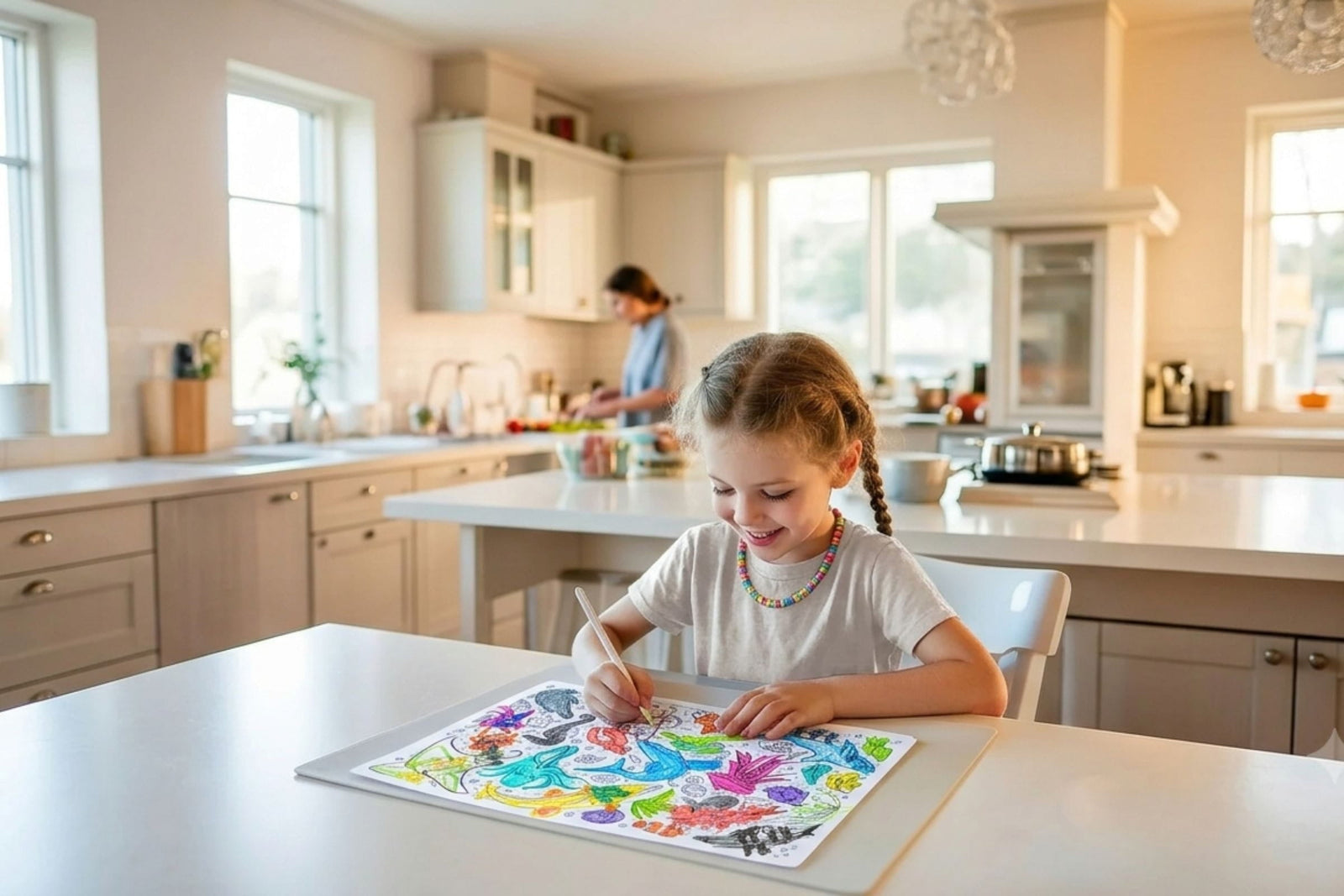
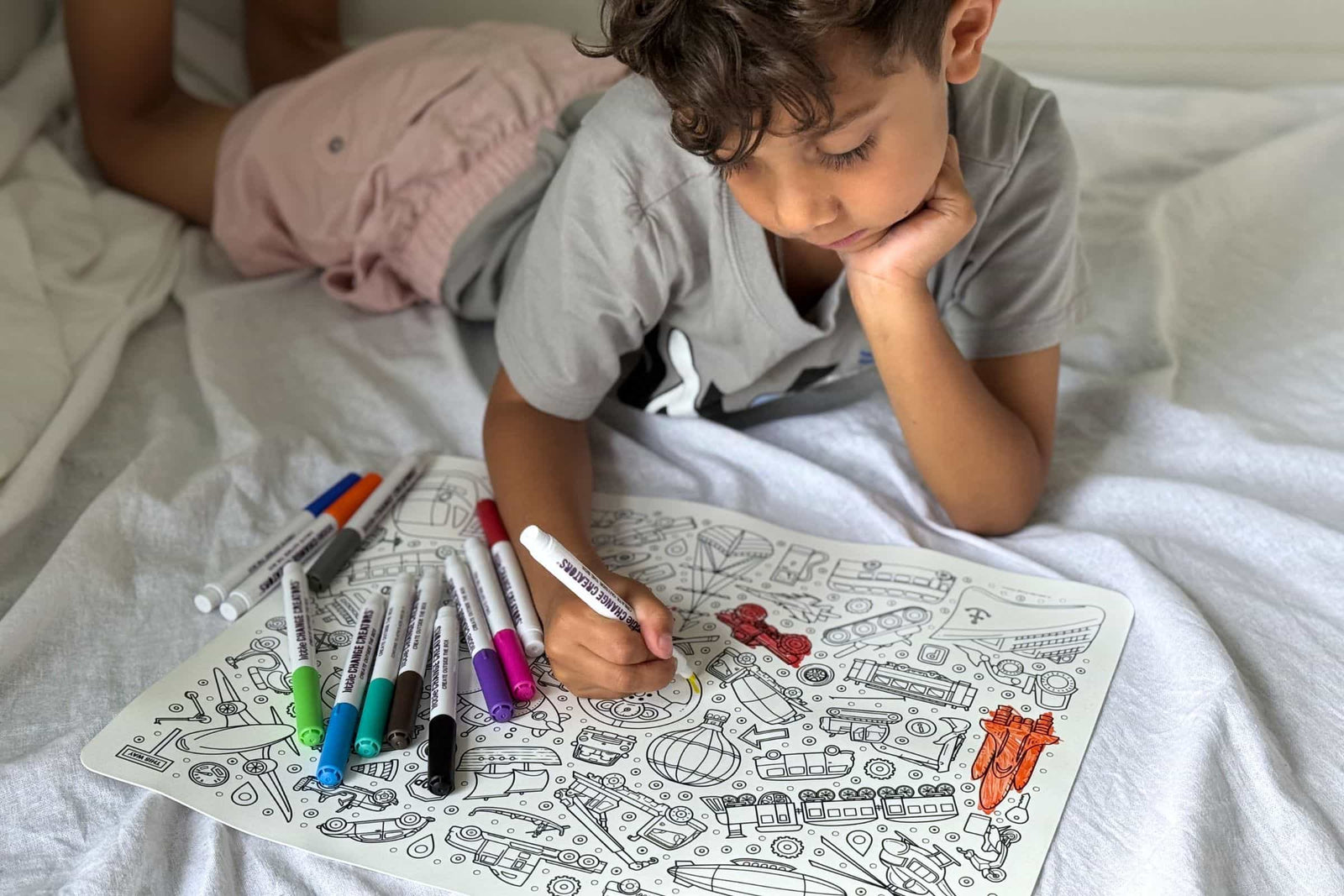
Colouring remains one of the easiest calming activities, but endless sheets of paper quickly become expensive and wasteful.
Reusable silicone colouring mats, like those from Little Change Creators, let kids colour, wipe clean and start again in minutes. They're mess-free, portable and ideal for parents who want simple entertainment without creating extra paper waste.
4. Masking tape adventures
A single roll of masking tape can become:
- roads
- hopscotch
- giant mazes
- pretend rivers
It removes easily from most hard floors and costs only a few dollars.

5. Story starter jar
Write prompts like:
- A dragon loses its glasses.
- Your dog becomes mayor.
- The moon lands in your backyard.
Children can draw, write or simply tell the story aloud.
6. Build a tiny world
Use LEGO, blocks, toy animals or even pantry items to create:
- a zoo
- a village
- a jungle
- a space station
The storytelling afterwards is often more engaging than the building itself.
7. Kitchen concert
Grab pots, wooden spoons and containers.
Create rhythms.
Take turns being the conductor.
Bonus points for marching around the house.
8. Reverse hide and seek
Instead of hiding from children...
Everyone searches for one person.
The first person to find them quietly hides alongside them until everyone is squeezed into the same spot.
Your kids will love this one!
9. Paper engineering
Rather than simply drawing, ask children to design something useful.
Ideas include:
- a paper aeroplane competition
- a bridge for toy cars
- a marble ramp
- a standing paper tower
This quietly introduces engineering thinking through play.
10. Shadow storytelling
Turn off the lights, grab a torch and create shadow animals or puppet stories against the wall.
It feels magical despite requiring almost nothing.
11. Museum challenge
Ask your kids to choose five favourite toys and create their own museum.
They write labels, arrange displays and become the tour guide.
This combines literacy, creativity and public speaking – all great skills to support them through life!
12. Indoor movement dice
Write activities on paper:
- Jump 10 times
- Dance
- Crab walk
- Spin
- Balance
- Stretch
Roll a dice and complete the challenge.
Perfect for burning energy between quieter activities.
13. Colour detective
Pick one colour and set a timer.
Get your kids to race around the house finding everything they can that matches. The child or team with the most matching items wins.
Older children can photograph their discoveries or sort them into categories.
14. Family interview
Children become journalists.
Give them pretend microphones and encourage them to interview siblings, grandparents or parents.
Questions often become wonderfully unexpected.
15. Quiet creativity corner
Sometimes kids don't need another activity.
They simply need permission to become absorbed in one.
Keep a basket ready with:
- pencils
- colouring materials
- books
- puzzles
- notebooks
- a reusable silicone craft mat for playdough, paint and other messy projects
Having an always-ready "rainy day basket" removes the daily decision fatigue for parents. A washable silicone craft mat is especially handy because it protects your table, wipes clean in seconds and moves easily between painting, playdough, STEM challenges and sensory play. If you're after a mess-free way to keep creative activities low-stress, our silicone craft mats are dishwasher-safe and machine-washable, helping busy families enjoy screen-free play without the cleanup becoming another chore.

The surprising benefit most parents overlook
Rainy day play isn't only about keeping kids occupied.
Unstructured play gives children opportunities to solve problems, negotiate rules, practise patience and entertain themselves without constant adult direction.
Many parenting resources focus on educational outcomes, but there's another benefit that's often overlooked: boredom itself.
When children aren't given entertainment immediately, their brains begin searching for it. That's where imagination grows.
Parents don't need to eliminate boredom—they just need to provide a few open-ended tools that allow creativity to take over.
Making rainy days easier (without adding more to your to-do list)
If you're already stretched thin, you don’t need the stress of creating magical childhood memories every time it rains.
Sometimes success simply looks like:
- 20 minutes without hearing "I'm bored".
- One activity that works for siblings.
- Less mess to clean afterwards.
- Fewer requests for screens.
For many families, that's more than enough.
If you're looking for even more simple ideas, our guide to fun indoor activities for kids includes additional screen-free inspiration that works year-round, not just on rainy days.
Conclusion
Rainy days don't have to mean expensive outings, complicated craft projects or endless screen time. The most memorable indoor activities are often the simplest—ones that encourage imagination, movement and independent play while giving parents a well-earned breather. By keeping a few low-cost ideas ready to go and choosing open-ended activities that kids can enjoy again and again, you'll be better prepared for whatever the weather brings.
And if one of our reusable colouring mats help turn a gloomy afternoon into a calm, creative one with almost no mess, that's a win for everyone!
Which of these rainy day ideas do you think your child would want to try first?
FAQs
What are the best screen-free rainy day activities for kids?
The best ones use things you already own rather than requiring a shopping trip. A mystery bag of random household objects for storytelling, a strip of masking tape turned into roads or hopscotch, and an indoor scavenger hunt are all free, take under a minute to set up, and often hold kids' attention longer than structured craft kits because they rely on imagination rather than step-by-step instructions.
How much screen time should Australian children have each day?
Australian guidelines recommend no more than two hours of recreational screen time each day for children aged 5–17. However, according to the Australian Bureau of Statistics, only around 28% of Australian children meet this recommendation, with the average child spending 2 hours and 51 minutes a day using recreational screens.
What can kids colour on instead of paper?
Reusable silicone colouring mats are a practical alternative to paper because children can colour, wipe them clean and use them again and again. They reduce paper waste, minimise mess and are ideal for busy families looking for simple screen-free activities. Little Change Creators' Re-FUN-able™ Colouring Sets are one example, combining double-sided reusable silicone mats with erasable markers for creative play at home or on the go.
How do I keep my child entertained indoors without spending money?
Focus on activities that use everyday household items. Storytelling games, indoor scavenger hunts, dance parties, paper challenges, toy rotations and imaginative play all encourage creativity without costing anything. The best activities are often the simplest because children create the fun themselves.
Why is unstructured play important for children?
Unstructured play helps children develop creativity, problem-solving skills, independence and resilience. When children aren't given step-by-step instructions, they learn to invent games, make decisions and entertain themselves—skills that support learning both at home and at school.
About the author

Paige McInnes is an Australian Small Business Champion, former IKEA designer, parent and founder of Little Change Creators, a People + Planet First Verified social enterprise. Drawing on experience in education, law enforcement and design, she creates practical, reusable creative play resources that help busy families nurture children's creativity with less mess, less waste and less stress.