

Mindful Childhood Development: Nurturing Young Minds Through Creative Play
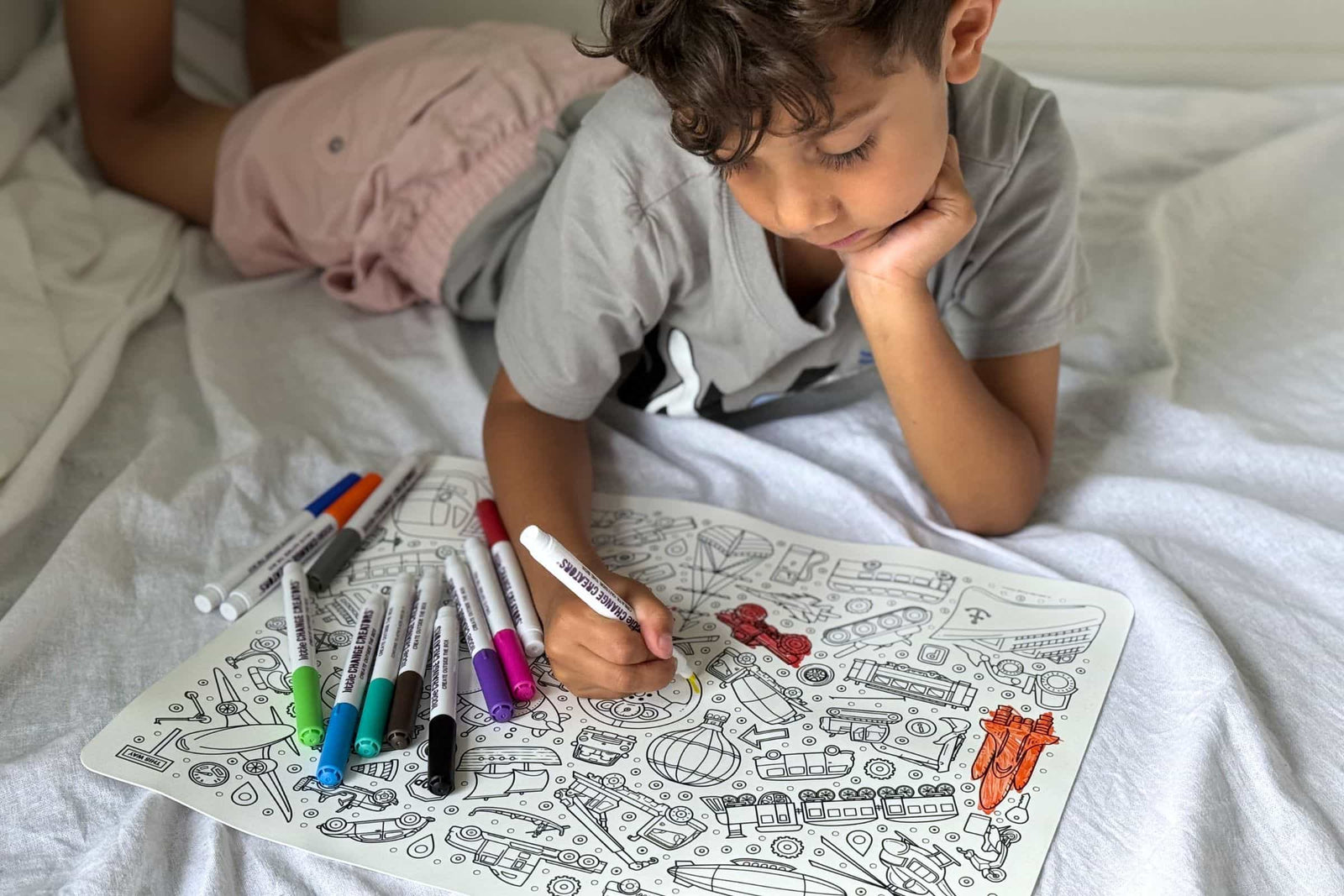
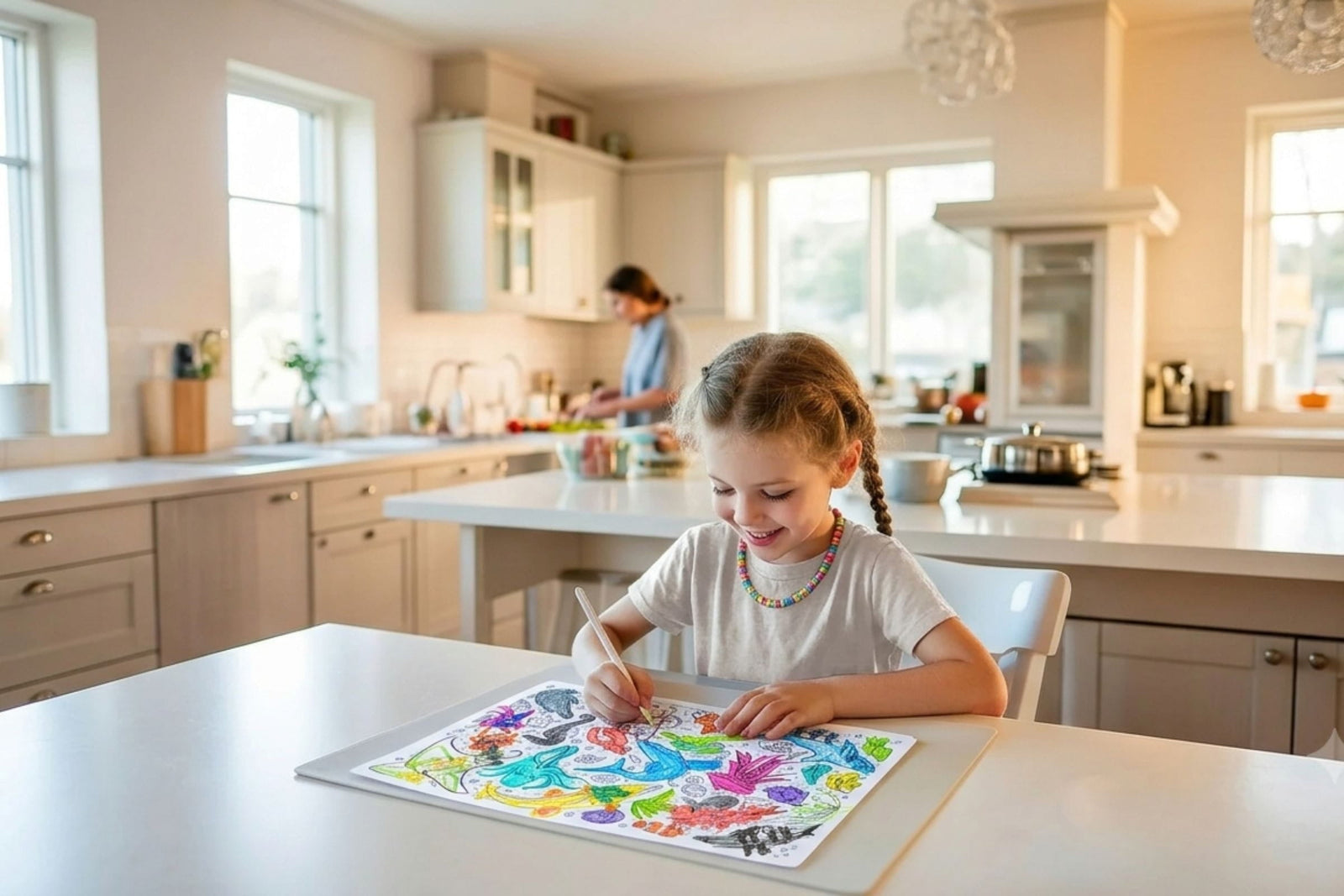
Picture this: It’s a rainy afternoon, and your child sits at the kitchen table, completely absorbed in creating patterns on a reusable silicone drawing mat. As you watch, you notice how their brow furrows in concentration, their shoulders relax, and a small smile appears as they proudly show you their creation. In this simple moment, you’re witnessing mindful child development in action - where purposeful play, creativity, and mindful interaction come together to support your child’s emotional and cognitive growth.
Why Mindful Parenting Matters
Mindful parenting isn’t about being perfect or zen all the time. It’s about being present, tuning in to your child’s needs, and responding with empathy and intention. Research shows that when parents practice mindfulness - by listening without judgment, validating emotions, and engaging in purposeful play - children develop stronger emotional regulation, empathy, and even better cognitive skills.1,4,5
According to Dr. Lisa Firestone, a clinical psychologist, "Taking the time to practice mindfulness with your child, even a few minutes in the morning or before bed, can have significant benefits for both parents and children."
The Science: How Mindfulness Shapes Young Brains
A landmark study found that primary school children who participated in a mindfulness-based social and emotional learning program showed significant improvements in empathy, perspective-taking, optimism, emotional control, and self-concept compared to peers in traditional programs1. They also reported fewer depressive symptoms and were seen as more prosocial by classmates.
- Empathy increased by 0.27 points (on a 5-point scale)
- Emotional control improved by 0.31 points
- Mindfulness rose by 0.34 points
- Depressive symptoms decreased by 0.19 points1
These changes might sound small, but over time, they add up - helping kids become more resilient, confident, and socially adept.
Play, a fundamental aspect of childhood, supports childrens’ social and emotional development. Research from the National Institute for Play indicates that early play behaviours, such as connection between parent and child, are crucial for developing neural pathways that support emotional regulation and learning.
Purposeful Play: The Heart of Mindful Child Development
Purposeful play isn’t just about keeping kids busy - it’s about creating meaningful experiences that spark curiosity and creativity. According to the National Institute of Education Singapore, purposeful play fosters a sense of wonder and autonomy, empowering children to explore, experiment, and take ownership of their learning.2
Benefits of Purposeful Play
- Encourages risk-taking and decision-making
- Develops social, emotional, cognitive, and motor skills
- Makes learning memorable and impactful2
For parents, this means choosing open-ended toys and activities that invite exploration - like building with blocks, creating art, or imaginative storytelling.
Creative Activities to Encourage Mindfulness
Engaging kids in creative activities can enhance mindfulness and support development:
- Mindful Colouring: Using tools like reusable colouring mats encourages focus and fine motor skills.
- Creating Art: Mixing colours and media cultivates creative thinking and the process of learning through play.
- Storytelling and Role-Play: These activities stimulate imagination and emotional understanding.
- Nature Walks: Observing and discussing natural surroundings promotes awareness and curiosity.
Incorporating these practices into daily routines can create meaningful opportunities for connection and growth.
Art and Mindfulness: A Powerful Pair
Art therapy and mindfulness together create a calming, supportive environment for children to express themselves and process emotions.3 Through drawing, colouring, or crafting, kids can communicate feelings that might be hard to put into words. When you add mindful attention - focusing on the process rather than the outcome - the benefits multiply:
- Stress reduction: Creative expression and mindfulness both lower anxiety and help children unwind.3
- Emotional regulation: Kids learn to identify and manage big feelings through art and reflection.3
- Self-awareness: Mindful art activities encourage children to notice their thoughts and feelings without judgment.3
Simple Mindful Parenting Tips for Everyday Life
You don’t need hours of free time or a background in meditation to practice mindful parenting. Here are easy ways to weave mindfulness into your daily routine:
- Be present: Put away your phone and give your child your full attention during play or conversation.4,5
- Validate emotions: Acknowledge your child’s feelings - even the tough ones - without rushing to ‘fix’ them.4
- Model mindfulness: Share simple breathing exercises or mindful colouring together (see our Guide to Mindful Colouring for Kids).
- Encourage open-ended play: Offer art supplies, building blocks, or reusable colouring mats and let your child lead the way.
- Practice gratitude: End the day by sharing something you’re both thankful for.
How Little Change Creators Supports Mindful Parenting
At Little Change Creators, we’re passionate about making mindful, creative play easy and accessible for busy families. Our reusable colouring mats and eco-friendly art supplies are designed to spark imagination, reduce waste, and give you convenient tools for purposeful play - at home or on the go. We believe that when creativity and mindfulness meet, kids thrive emotionally, socially, and cognitively.
Another meaningful way to support your mindful parenting journey is through intentional reading time. The A Kids Book About series tackles big topics like emotions, empathy, belonging, and resilience in a kid-friendly, honest way. These beautifully designed books empower parents to open up conversations that might otherwise feel tricky or overwhelming. Whether you're talking about anxiety, gratitude, or kindness, each title encourages connection and curiosity, helping children build emotional intelligence and self-awareness - key outcomes of mindful parenting.
For more inspiration, check out our blogs on Life Skills to Teach Your Kids, Colour Theory for Kids, and How Sensory Play Helps Child Development.
Beyond the Basics: What Most Parents Miss
Many articles focus on mindfulness as a set of techniques, but true mindful parenting is about the quality of your connection. It’s the small moments - listening to your child’s stories, sharing a laugh over a drawing, or comforting them after a tough day - that build the foundation for resilience and creativity. Mindful parenting also means accepting your own imperfections and modelling self-compassion, teaching your child that it’s okay to make mistakes and learn from them.4,5
Conclusion
Mindful child development isn’t about adding more to your to-do list - it’s about being present for the moments that matter. Through purposeful play, art, and mindful interaction, you can nurture your child’s emotional, social, and creative potential. Start today with a simple mindful moment, and watch your child’s confidence and creativity bloom.
Want more mindful parenting tips and creative ideas? Subscribe to our email list and join a community of parents raising confident, creative kids!
References:
- https://pmc.ncbi.nlm.nih.gov/articles/PMC4323355/
- https://www.nel.moe.edu.sg/nurturing-early-learners/iteach-principles/engaging-children-in-learning-through-purposeful-play
- https://www.kidsfirstservices.com/first-insights/art-therapy-and-mindfulness-creating-calm-through-creativity
- https://beautifulsoulcounseling.com/mindful-parenting/
- https://www.nct.org.uk/information/life-parent/support-change/what-mindful-parenting-and-it-right-for-me
- https://pmc.ncbi.nlm.nih.gov/articles/PMC7432887/
- https://digitalcommons.lesley.edu/cgi/viewcontent.cgi?article=1039&context=mindfulness_theses
- https://www.thebrainworkshop.com/blog/the-importance-of-mindful-parenting/
- https://littlechangecreators.com/pages/faqs
- https://www.frontiersin.org/journals/psychology/articles/10.3389/fpsyg.2024.1420588/full
- https://pmc.ncbi.nlm.nih.gov/articles/PMC4827929/
- https://www.sciencedirect.com/science/article/abs/pii/S0190740924000240
- https://onlinelibrary.wiley.com/doi/full/10.1111/mbe.12399
- https://www.vincegowmon.com/inspiring-quotes-on-child-learning-and-development/
- https://pmc.ncbi.nlm.nih.gov/articles/PMC10967784/
- https://pmc.ncbi.nlm.nih.gov/articles/PMC2730447/
- https://copingskillsforkids.com/blog/the-power-of-connection
- https://www.verywellmind.com/benefits-of-mindful-parenting-7254332